How should we assess current market levels?
The oil market remains extremely tight. Brent crude is trading at USD 94 per barrel this Monday, April 20 (2:00 p.m.), around USD 30 higher than before the intervention. While the oil market previously faced an oversupply of 3 million barrels per day, it is now running a deficit of 7 million barrels per day. Should the Strait of Hormuz remain blocked for a prolonged period, the oil shortfall could reach 17 million barrels per day, potentially pushing Brent prices into the USD 150–200 range and significantly weighing on global growth.
Turning to equities, earnings growth expectations for 2026 stand at +14% in Europe and +12% in the United States¹. While these forecasts appear credible in the U.S., given investment plans related to artificial intelligence, they seem overly optimistic in Europe. This reflects the lack of German investment (which is nevertheless expected) and France’s complex economic situation, marked by limited fiscal capacity and challenges in the luxury sector (see Hermès).
Credit markets are also holding up well, largely supported by clearly positive technical factors, with demand for risk assets significantly exceeding available supply.
In government bond markets, short maturities (< 2 years) have already corrected sharply as investors revised their expectations for central bank policy rates, now anticipating 2 to 3 rate hikes from the European Central Bank to counter a potential resurgence of inflation. As for longer-dated bonds, the market remains stable, caught between the risk of renewed inflation and the equally plausible slowdown in economic growth.
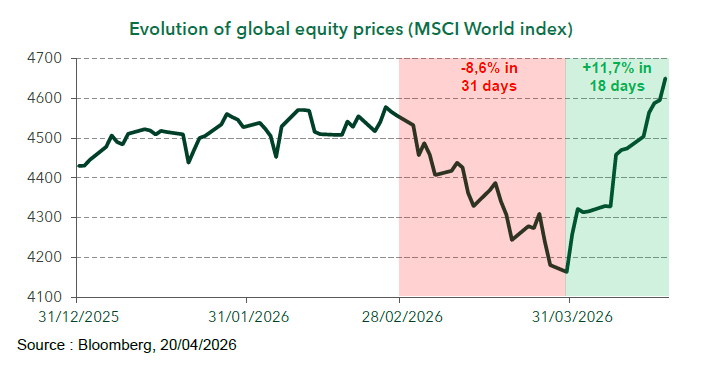
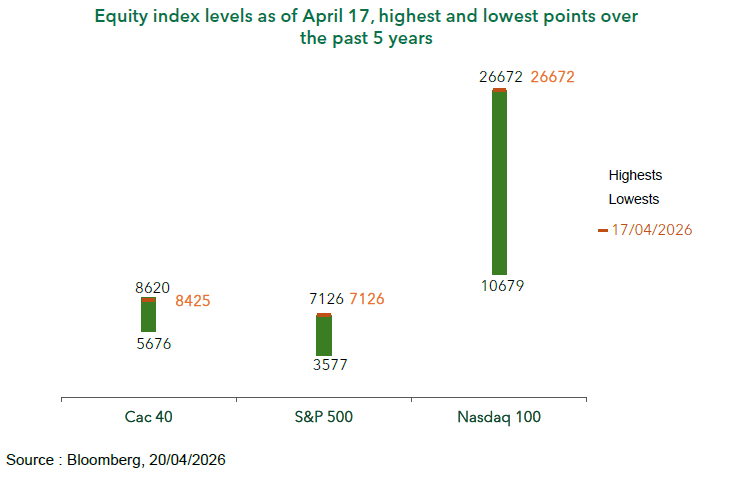
In summary, both bond and equity markets are holding at, or even exceeding, their historical highs, driven largely by investor behavior. Investors fear missing out on a rebound and therefore remain heavily invested in risk assets. This optimism is not irrational either, as economic conditions remain broadly solid, supported by investment spending.